Weather's Quiet Role in Shaping Odds Across Football Over/Unders and Tennis Match Lengths
Noah Ludwig · Jun 30, 2026
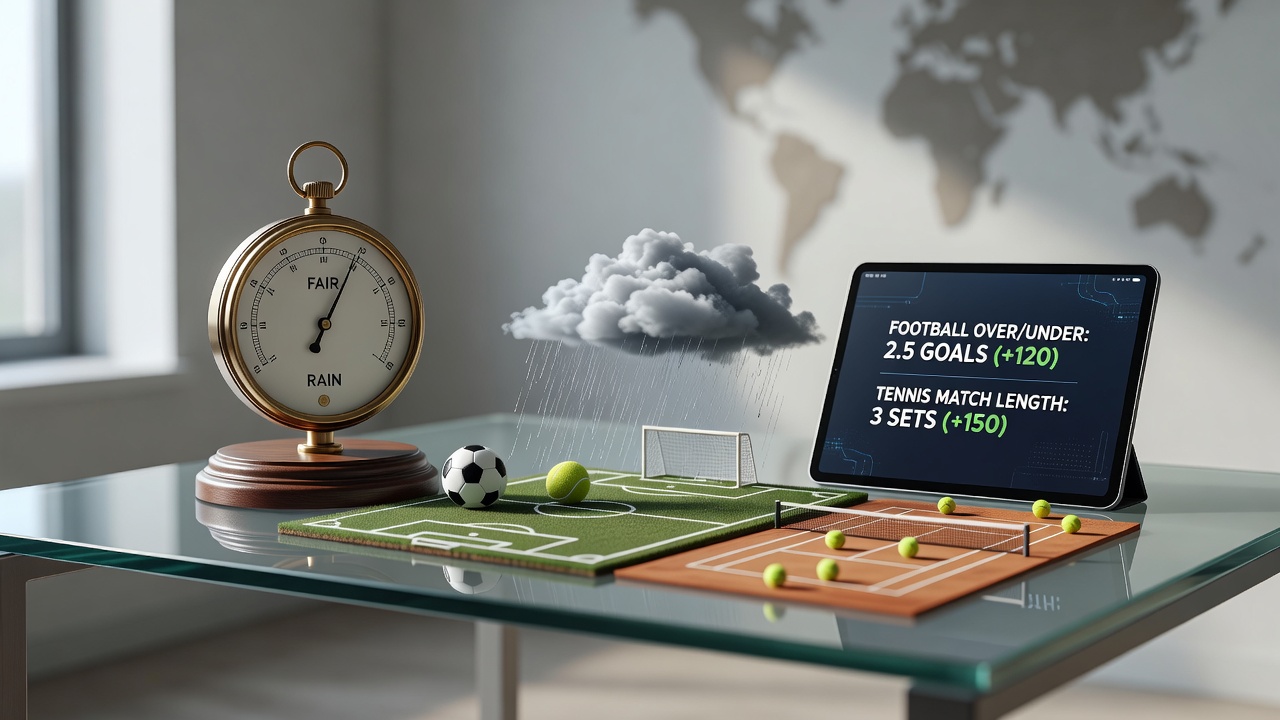
Weather's Quiet Role in Shaping Odds Across Football Over/Unders and Tennis Match Lengths
Atmospheric conditions exert measurable influence over football totals markets and tennis match duration projections, with data from multiple seasons showing consistent correlations between precipitation, wind speed, temperature, and scoring patterns or game lengths. Observers note that bookmakers adjust lines accordingly when forecasts indicate changes in these variables, particularly ahead of fixtures in June 2026 when European leagues wind down and major tennis events reach their later stages.
Precipitation Effects in Football Scoring Markets
Heavy rainfall often reduces total goals in outdoor matches because the ball travels slower across saturated surfaces and players adjust their passing and shooting approaches to avoid slips. Studies from the National Oceanic and Atmospheric Administration document how pitch friction increases under wet conditions, leading to fewer high-percentage scoring opportunities. In leagues where over/under lines sit near 2.5 goals, such adjustments appear in pre-match odds when rain probabilities exceed 60 percent according to meteorological models.
Conversely, light drizzle sometimes produces the opposite effect by making the ball slightly heavier without creating standing water, which can encourage longer-range attempts that occasionally result in deflections. Data aggregated across multiple European competitions illustrates these shifts in goal distributions, with operators revising totals downward when sustained precipitation is expected during the second half.
Wind and Temperature Influences on Match Totals
Strong crosswinds alter ball trajectory in open stadiums, prompting teams to favor shorter passes and reducing the frequency of crosses into the box. Research published by the European Centre for Medium-Range Weather Forecasts highlights how wind speeds above 25 km/h correlate with lower average goals per game in exposed venues. Temperature extremes also play a documented role; higher heat levels above 30 degrees Celsius accelerate player fatigue, which tends to compress attacking phases and lower overall scoring rates in later stages of matches.
Bookmakers incorporate these variables into their models, and historical records show that over/unders in leagues such as the Bundesliga and Serie A respond to wind and heat forecasts released 48 hours before kickoff. June 2026 schedules include several high-profile fixtures where afternoon temperatures and regional wind patterns are already factored into early market movements.
Tennis Match Length Adjustments Under Variable Conditions
Tennis contests extend or contract based on weather because rain interruptions force rescheduling that affects player recovery and court conditions upon resumption. Clay and grass surfaces absorb moisture differently, changing ball speed and bounce height, which in turn influences rally lengths and set durations. Tournament data from the Australian Open and Wimbledon archives indicate that matches played after significant rainfall average 12 to 18 minutes longer per set due to slower conditions and more conservative shot selection.

Heat protocols further modify match lengths when temperatures trigger mandatory cooling breaks, adding cumulative time that bettors tracking over/under duration markets must account for. Wind affects serve accuracy and trajectory on faster surfaces, sometimes producing shorter points when gusts disrupt timing. Operators monitoring these factors adjust implied probabilities for three-set or five-set outcomes accordingly.
Integrated Market Responses and Data Patterns
Operators across multiple platforms update football over/under lines and tennis match-length propositions when updated weather forecasts become available, and patterns emerge most clearly in markets with sufficient liquidity. Records from the past five seasons demonstrate that totals markets in football move an average of 0.15 goals lower when heavy rain is forecast, while tennis duration lines extend when extended rain delays are anticipated. June 2026 brings overlapping schedules of domestic football finales and grand-slam tennis events, creating simultaneous opportunities where weather-driven adjustments appear across both sports.
Industry reports from the American Gaming Association and academic analyses from sports science departments at universities in Canada and Australia confirm that these environmental variables remain secondary yet persistent factors in pricing accuracy. Bettors and analysts who track localized forecasts alongside historical performance data under similar conditions identify edges that arise when initial lines lag behind meteorological updates.
Conclusion
Weather functions as a quiet but consistent variable that reshapes pricing in football over/under markets and tennis match-length propositions through documented effects on playing surfaces, ball behavior, and player output. Data from meteorological agencies and sports governing bodies continues to support the inclusion of atmospheric forecasts in modern betting models, particularly during periods such as June 2026 when multiple high-stakes events coincide.